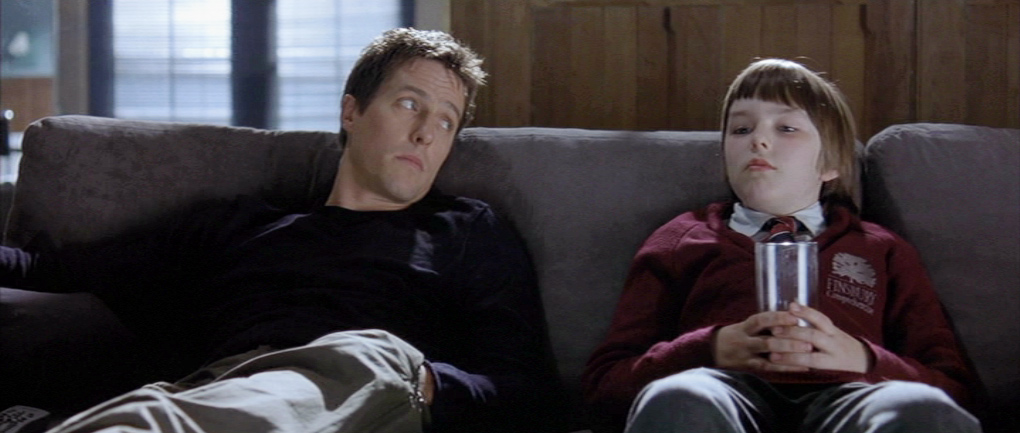
Forgotten Gem: High Fidelity is like singing in your sleep
High Fidelity – 2000
Directed by Stephen Frears
Starring John Cusack, Iben Hjejle, Lisa Bonet, Jack Black, Todd Luiso, Tim Robbins, Joan Cusack, Catherine Zeta-Jones
Screenplay D.V. DeVincentis, Steve Pink, Scott Rosenberg and Cusack taken from the novel by Nick Hornby
Mix tapes. They’ve been lost in time, replaced playlists on iTunes. It’s not the same. There was a time when everything was explained in terms of Top 5 Lists…and Top 10′s if the well was deep enough. I had over 1300 albums. But I did not have as many as my best friend, Steve, who had around 2000, so I didn’t have a problem. I didn’t have my own house, either.
John Cusack was top 5 when High Fidelity came out. I am not sure if this meant he sold movies better than others, but to geeks like me, his movies allowed someone as geeky as I was the pleasure of being even just as obsessed with minutiae, but with movie star looks. His inconsistent career was on a major upswing, and with this film, almost all of the risks paid off.
As Rob Gordon, record store owner and one of a trio of self-appointed snobs who work at the store, Cusack takes us on a musical journey of his love life. There is a running dialogue that breaks the 4th wall, and it works. It’s a advanced version of a John Hughes film, but somehow more immature than anything Hughes ever did. Gordon is not an innocent protagonist. In fact, he’s kind of a self-obsessed asshole. The girls he’s been with run the gamut from wretched to sad sack. He’s wanting to get the last one back, and she’s in between.
The biggest risk of the film would be that last girl, Laura (played by Hjejle, with a bad European haircut). She is an unusual looking woman, but that only makes her appearance more interesting. Her performance is nuanced and melancholy, but it is believable. She’s definitely more grounded than Rob, even if her rebound is with a ridiculously hipped-out Tim Robbins. The person we see is someone who might be worth going crazy over.
The crazy part seems just childishness at this point, but then, I have been married for 10 years and have 2 kids. Rob Gordon represents an unmarried and undecided man. Hopelessly romantic, and clueless to the things that really matter. Instead, we have endless lists. He has an opportunity to act, when Laura faces a true tragedy, but instead finds himself listening to Top 5 lists about death. At least he beats Jack Black at one point. The very next scene, he’s going over his own list…during the service. He has a ways to go.
Jack Black has never been more annoying, yet he’s rarely been more funny. Most of his scenes are the ones that we remember from the film and they were definitely the ones they showed in the commercials. The contrast between he and the timid Louiso is extreme, but it works. There is much that the other two could learn from his interactions with his girlfriend (Sara Gilbert, in just about the last thing I remember seeing her in).
Stephen Frears moves smoothly through the past and the present. We are granted real insight as we see real development. The story is about a fear of growing up, but there is not much flinching in the reasoned monologue that Cusack presents the viewer with. We know he’s been through all of this by the time we are seeing it, but his vantage point has not changed much. It does change significantly, though. Frears can keep the story sharp and crisp, but he is not afraid to let actors improvise a little.
The music in the film is as varied as anything ever produced in a movie about songs. One can feel several enjoyable hours spent bringing the music to the fore. If the songs don’t resonate at first, the reactions of Barry (Black), Dick (Louiso) and Rob allow the viewer to gravitate towards that feeling. It’s not important that the songs are universal to make the feeling of categorizing them so. This is one of the few times where having more than a couple of writers still feels cohesive, and that can be attributed to the material, and to Frears.
The thing about High Fidelity is that it’s so confused and lacking clear vision; just like love. While Rob can list the traits that he loves about Laura in one deeply intimate narrative with the viewer, it does not stop him from running into a brick wall the very next opportunity. After spending half of the movie apart, they get back together, and things are going better than ever…until he starts making a mix tape for another girl.
Two days later, he’s asking his girlfriend to marry him. I know the feeling. Everybody likes the feeling of singing in their sleep, but eventually adults grow tired of that.
(****1/2 out of *****)
Now for Singing in My Sleep:
Forgotten Gem: Cool Hand Luke is the man
Cool Hand Luke – 1967
Director Stuart Rosenberg
Starring Paul Newman, George Kennedy, Strother Martin, Dennis Hopper, Wayne Rogers, Jo Van Fleet, J.D. Cannon, Clifton James, Harry Dean Stanton, Lou Antonio, Morgan Woodward, Joe Don Baker, Ralph Waite, Joy Harmon, Anthony Zerbe, Luke Askew
Screenplay Donn Pearce, Frank Pierson
“Sometimes nothin’ is a pretty cool hand.”
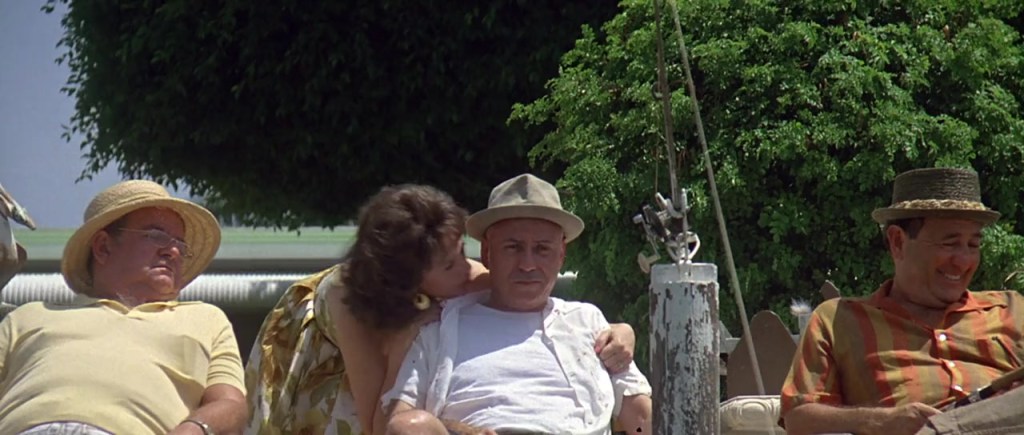
In many ways a spiritual predecessor to One Flew Over The Cuckoo’s Nest, Cool Hand Luke is one of the landmark films of the stellar career of Paul Newman. Getting thrown into a prison chain gang after the relatively minor offense of cutting the tops off of parking meters while drunk, Luke Jackson (Newman) acts as if it were the only place he ever could have ended up. After a military career filled with accolades but no promotions, Jackson acts as if his life could end up in no other way.
As a study of incarceration in the 60′s, I am not sure how accurate it is. One of the authors, Pearce, served time in several institutions himself. As a buddy movie, it serves an important function of exemplifying the human spirit within the fellowship of others. Indomitable is a word that comes to mind.
There are many unforgettable moments in the film, from the opening smile, through the fight between Luke and Dragline (Kennedy), the eggs, every one of the escape attempts and the ditch digging. All of the scenes work within the context of the story and the characters and not as a showcase of some sort.
“Hey, hey. Here he is, Boss, deader than hell but he won’t let go!”
Newman walks past the line of no return with no intention of looking back. It is a nuanced role fraught with opportunities to skate, but he never does. Something in Luke Jackson gives up before the first bell rings. Something else will keep standing, even if he’s beat. He’s a beautiful loser indeed. He has a regular argument with the old man, or God, to us. He believes that God is there, but perhaps just not there for him. But he will never give up, or even stop smiling.
The prison warden and staff, of course, is an allegory for Satan and those doing his bidding, and the road work is the life of a the average stiff locked out of Eden. We are here, only to be kept in line.
As Dragline, Oscar Winner Kennedy could be any one of us who is supposedly succeeding in our lot in life. It takes someone like Luke, who never stops smiling, even with “a hand full of nothin’” to show what we are missing, and to give us hope. With Jackson – as common a name as Jesus – Dragline and the others see a man who can perpetually turn the other cheek and always try to improve his situation, even if it means his life. This provides inspiration and makes Dragline kind of like Simon-Peter in the end…like any of us could be.
The acting of the afore-mentioned is remarkable, to be sure, but the rest of the cast gives remarkable support. Many actors that went on to have long and successful careers work right along side him, providing character with minimal lines. The best of these, perhaps, is Harry Dean Stanton, who provides a double threat by singing most of the songs on the soundtrack.
The Warden (Martin) and his staff, most prominently featuring the boss with no eyes (Woodward) are also filled with great character actors, like Cannon and Askew. These actors add just a touch of personality, but, altogether form a wall of futility that seems impenetrable and porous at the same time.
This film cemented Newman’s legacy as an actor who could sell a movie by name alone. There are almost no special effects, per se, but the vistas are grand, vast and miserable (for cast, that is). Rosenberg’s career after Cool Hand Luke was uneven, if steady. If there was another high point, it was The Pope of Greenwich Village.
The reason I list this movie as a Forgotten Gem is because of the dearth of people who know more about this film than the quote which will not be mentioned here. If you want to know what the quote is, see the film for yourself. You won’t regret it.
(***** out of *****)
CPE, Em and El: Forgotten Gem – Akeelah and the Bee is bravely facing a new world
Akeelah and the Bee – 2006
Written & Directed by Doug Atichison
Starring Keke Palmer, Laurence Fishburne, Angela Bassett, Curtis Armstrong, J.R. Villareal, Sean Michael Afable, Erica Hubbard, Lee Thompson Young, Julito McCullum
Akeelah: Our deepest fear is not that we are inadequate. Our deepest fear is that we are powerful beyond measure. We ask ourselves, Who am I to be brilliant, gorgeous, talented, fabulous? Actually, who are you not to be? We were born to make manifest the glory of God that is within us. And as we let our own light shine, we unconsciously give other people permission to do the same. (quoting Marianne Williamson)
Dr. Larabee: Does that mean anything to you?
Akeelah: I don’t know.
Dr. Larabee: It’s written in plain English. What does it mean?
Akeelah: That I’m not supposed to be afraid?
Dr. Larabee: Afraid of what?
Akeelah: Afraid of… me?
Akeelah and the Bee is an accomplishment beyond measure,. It is a fearless endeavor into a life worth living. It is a smart film about trying to be brilliant. That brilliance comes from within a person’s desire, and from working beyond all of the fears one has about success, as well as failure. Of all the roadblocks that one can see in the film, none are so big as those our protagonist has placed within herself.
Developed over many years by Atchison after seeing the Scripps Spelling Bee, he had a tough time getting a green light until the release of Spellbound. Having the makings of an ABC afterschool special, it rises above this by its honesty, natural flow and its purpose. The strength of this film is the way the script, pace and acting work together. Each of the elements are superb. The fear of success the weight of failure are intricately woven with each scene. It carries a load but never buckles from the load.
A big reason for this is the performance of Akeelah Anderson by Keke Palmer. She is as beautiful as she is vulnerable. She walks the line with every step of the way and her face shares every emotion on that journey. We see the world getting larger before her eyes, and we are drawn into it with her. She is a relatively successful actress now, but she has the talent to be as good as the woman who plays her mother in the film.
“You know Akeelah, you ain’t short on people who want to help you.”
Angela Bassett has been one of the best actresses on film since her breakthrough Boyz n The Hood. Here she treads familiar ground, but that’s the point. When you need a clean up hitter, you get someone who can knock it out of the park. She is the epitome of someone carrying a burden with eyes nearly closed to the world. Seeing how her eyes are opened is anything but a routine scene. One can see the frustration turn to thought, and the thought processed into acceptance and a pride that any parent can feel. There are no short cuts to any of these points. The viewer goes on a real journey.
Laurence Fishburne, as Akeelah’s coach, Dr. Larabee, was opposite Bassett in Boyz…,and he is a counter of sorts here. At least at first. His coach is like many of his best characters: someone who gives and demands respect. The love in his character is intricately weaved behind the lessons that he shares with Akeelah. It’s a beautiful, multi-layered portrayal and one of the best of his career.
The ending of the movie, especially the spelling of the last word is so well expressed, it brings tears of joy. It’s a reward for taking every step with Akeelah, and realizing that it is love, not learning by rote, that pushes one to true intelligence. That is the true “manifest glory of God” we all are gifted with.
My daughters, upon seeing the credits begin to roll, immediately sought out dictionaries and started writing down words. Then they started sharing them with us. There is joy in their hearts with a love for learning. My wife and I are grateful to be able to give some of that back.
(***** out *****)
Em’s review:
CPE: So, did you like this movie?
Em: I give it a 4 and 1/2 out of 5. Some of the scenes had bad words in it, like b-i-t-c-h. And Dad, I am trying to study.
CPE: Do you think that those words might have been put in there to prove a point?
Em: No.
CPE: No? What do you mean?
Em: Dad, I am trying to study my words!
CPE: So who is your favorite character?
Em: I’m studying!
CPE: Come on! Tell me!
Em: My favorite character was Akeelah. She is sweet and she never gave up on her dreams. She almost did, though.
Em took this moment to go off and continue writing words down out of the dictionary, something that El was doing too.
El’s review:
CPE: El, did you like this movie?
El: Yeah, I liked that Dr. Larabee started teaching her again.
CPE: Was the Dr. your favorite character?
El: Mmm: Akeelah and the Doctor.
CPE: Did you like how the Mother started helping her daughter?
El: Mmmhm. Did I tell you I like the Mother too?
CPE: No, but do you?
El: Yep.
CPE: Was this a sad movie?
El: Kind of.
CPE: What made the movie happier?
El: She got happy.
Mrs. CPE: How did she get happier?
El: By hugging the doctor.
Mrs. CPE: Do we get happier by hugging our doctor?
El: Only a spelling doctor.
At this point, El went on about her business, writing down words out of the dictionary, too. They are like herding cats when they are spelling, too.
Halloween Gems: Cool Papa E Reviews The Firefly Films Of Rob Zombie
It’s a nearly classic duo of films waiting for a third. Rob Zombie’s House of 1000 Corpses and The Devil’s Rejects have a place in the sickened hearts of cult followers. He had something big on the horizon when he was derailed by the quick but unfulfilled success of the Halloween remake and its dud of a followup. The key to the success of the Firefly films lay in the unfiltered violence and the creation of full-blooded characters that were sociopaths and dangerously funny simultaneously.
The House of 1000 Corpses – 2003
Written and Directed by Rob Zombie
Starring Sid Haig, William Moseley, Sheri Moon Zombie, Karen Black, Tom Towles, Rainn Wilson, Chris Hardwick, Erin Daniels, Jennifer Jostyn, Walton Goggins, Matthew McGrory, Robert Mukes, Dennis Fimple, Jake McKinnon, Harrison Young, Walter Phelan
Thematically similar to The Texas Chainsaw Massacre, …1000 Corpses derivates in several important ways. The most important of these is the emphasis on characters, and not showing a preponderance of mindless nutjobs. The primary characters are Mama and Baby Firefly (Black and Moon Zombie) along with Otis (Moseley). Baby, in particular, has a sarcastic mix of sexuality and childishness that belies her sadistic underpinnings. Moon Zombie shows a freedom of conscience that one could imagine developed being raised in a family of vicious murderers. Otis is harder to peg in the first one. It’s clear that he is angry, argumentative (with whom, is not clear) and, aside from the fabled Dr. Satan, the most creative of the killers. Mama Firefly is easily the most grating of the personages, as her routine seems more like that of a cat woman than someone who runs a ship of murderous fools.
At the museum / gas station / chicken shack, Captain “Cutter” Spaulding is a plain old a-hole. His early dispatching of two robbers could be seen as typical southern justice, which allows some room for surprise. The element is kind of an outer layer of hell. You only can pass if you are incredibly dense or foolish. In this film we have both.
The pace of the film is plodding and filled with dread. By the time that the 4 kids realize they are in trouble, we’ve seen so many psychedelic flashes of horror (circa 1977) there is no question to us that there will be no escape. Of course, I would have been gone from the museum the exact moment that Spaulding shows his teeth. Then once more when I saw that everyone at the house except for Baby had the same type of blackened, horrific teeth.
The law is represented in an incredibly ignorant fashion. It would seem that if over 1000 people had gone missing in the area, local heat would have a bit more back up when visiting the local creepy farm. The group of B-Movie actors, freaks and geeks littered throughout the film is unprecedented outside of a Tarantino film. In the last act, we have so many different types of ceremony, it’s tough to tell who is in charge. This last scene rescues this wrong turn.
(***1/2 out of *****)
The Devil’s Rejects - 2005
Written & Directed by Rob Zombie
Starring Sid Haig, William Moseley, Sheri Moon Zombie, Leslie Easterbrook, Tom Towles, William Forsythe, Ken Foree, Danny Trejo, Diamond Dallas Page, Tyler Mane, Lew Temple, Dave Sheridan, Michael Berryman
The Devil’s Rejects is such an incredible change of pace (if not tone) that it almost feels like it’s not a sequel. That is, until you get a good dose of Baby. Her character is so in tune, it’s like the greased wheel that makes the others drive straight. Drive this movie has plenty of. We find out that Otis is more than just angry. He’s funny as hell. The role is somewhat a breakthrough for Moseley, who completely owns every scene he is in. Captain Spaulding is also fleshed out more, resulting not only in more witty banter, but an awesome dose of those horrendously filthy teeth.
The film balances with the circle of the fugitives attempting to reconnect and the law, represented by the vengeance seeking brother (Forsythe) of the sheriff from the original. He has Mama Firefly, this time played by Easterbrook. The same maniacal energy, with decidedly better teeth than Black’s version, Easterbrook presents a winsome nutbag with no connection whatsoever to reality. The sheriff’s brother makes it a duo. His actions, while entertaining, are so imbalanced that they threaten take the viewer out of the willing suspension of disbelief. The movie takes a turn that threatens to lead everyone off the cliff. Into this combustion enters the element of Trejo and Page, as a couple of bounty hunters.
Baby, Otis and the Captain have to keep moving, and with each move, people suffer and die. They have a magical coolness about them, which is engaging as it is intimidating. As happened in the original, some of the deaths are quick, some of them drawn out, quite cruelly. One of my favorite character actors from Unstoppable, Temple, suffers cruelly, even after he expires.
The film is at its best with the somewhat frequent, witty banter of the 3 fugitives. So engaging are they, even after administering some absolute brutality, the viewer forms a bond with them, like the one formed with other anti-heroes from classics like Goodfellas and The Player. By the end of the film, you are rooting for the bad guys to win. Every time one experiences the Butch Cassidy and the Sundance Kid-style ending, it’s hard not to hope that they find a way out. If only so Zombie can make it a trilogy.
(****1/2 out of *****)
Forgotten Gem: Déjà Vu is pure, delightful hogwash
Déjà Vu – 2006
Director Tony Scott
Starring Denzel Washington, Val Kilmer, Jim Caviezel, Paula Patton, Bruce Greenwood, Adam Goldberg
Screenplay Bill Marsilii, Terry Rosso
When I discovered that Tony Scott had taken his own life, I felt conflicted. He had directed some of the most overrated pulp (Top Gun, Days of Thunder, Man on Fire) I had ever seen, with a style so abrasive that it made me bristle. On the other hand, he was a director that appealed to many good to great actors, like Denzel Washington, Gene Hackman, Val Kilmer and Tom Cruise. Washington in particular did 5 films with him. Most of these films were above average, mainly due to his influence and the way that Scott handled actors on the undercard. Déjà Vu is a great example of both of these aspects.
Washington is ATF Special Agent Doug Carlin, who is brought in on two cases and in his efforts, finds a causal connection between them that is not what anyone else would expect. Finding out about a body that washed ashore around the time of an explosion that destroys a ferry fully loaded with people, Carlin finds that the floater Claire Kuchever (Patton) was actually found an hour before the detonation. He concludes that he needs to center the investigation on her. This is where the movie discovers 4 wheel drive and goes completely off-road.
FBI Special Agent Paul Pryzwarra (Kilmer), also on the task force, is impressed with what he sees of Carlin and offers him a spot on another team. The concept behind this team is a convoluted device called “Snow White,” which, through modern technology (you know, Google Earth-n-stuff) allows the team to look about 4.25 days in the past and view things from every angle and sound. As they concentrate their efforts on Claire, they make a discovery which catapults Carlin from observer into a participant.
Washington’s performance is extraordinary, even for the material. He specializes in being an observer, and this film allows him to do this in spades. There is a moment early on, during an autopsy that shows the chemistry between actor and director and the character actors. As the coroner is going over the report on the body of Kuchever, Carlin places his gloved finger on her mouth. The coroner jumps at the breach of professional etiquette. Washington, as Carlin, handles this delicately, allowing the coroner, along with us, to see that what he noticed was duct tape that had been placed over her mouth. The coroner, played by veteran actor Brian Howe, is allowed the luxury of not over reacting to his gaffe. A lesser director would have persisted in having the coroner overreact and for Carlin to dismiss him arrogantly. Scott and Washington together always recognized that every professional actor and their characters have professional pride. When they allow this to be preserved, everyone benefits.
Everyone, I should say, except Adam Goldberg, who plays the inventor Dr. Denny. Goldberg, a notorious scenery chewer, almost obliterates the chemistry by himself alone. His one liners are questionably written, but performed absolutely horribly. It’s one thing to be an asshole, it’s another thing to be unwatchable. Nonetheless, the strength of the rest of the cast helps to overcome the drawback.
Kilmer is so understated, he is mostly unrecognizable here. There is no swagger, a bunch of humility and none of the excess weight. Bruce Greenwood is always solid and here, as the agent in charge, is no exception. Alexander is the conscience of the team, with a direct, honest and considerate commentary or reaction to the events as she sees them.
As the bad guy, Caviezel is pure gun nut crazy. His performance, set to evoke comparisons to Timothy McVeigh, is accented with Caviezel’s ability to find the serious in every situation. No grandstanding, just straight up, man-on-a-mission style determination. Another plus for the plot is that there is no blatant attempt to tie politics into the mix. That would be a mistake. Scott recognized that crazy does not have to come from one of the two sides of politics. It makes its own way.
Paula Patton is one of the most beautiful women I have ever seen on film. She is able to express innocence, confusion and determination at once. This is the first movie I remember seeing her in, and she’s been good in everything I have seen her in since. Her reactions to the absurdities of the plot are essential to our suspension of disbelief.
And there is much here to not believe. Borrowing very loosely from Einstein’s Rosen Bridge theory of wormholes, the sci-fi plays fast and loose with reality, but it’s a means to an end. The story lines connect nicely, even if they are telegraphed a bit too often. Washington and Patton are show great chemistry in the last act, even with enough self-referential moments to qualify as a Star Wars prequel.
Scott, for his part, allows the film to breathe, which is a rare move for him. Films like Man on Fire, riddled with so many quick cuts, would be cause to give some of our more vulnerable folks epileptic fits. One could never decide if they were watching a music video or a kaleidoscope lens. There are some spectacular explosions here, just like one would expect in a Bruckheimer production. This time, Scott lets our eyes linger on the depth of the flames. The lingering camera also helps to help the characterization of Carlin. If the shots are choppy, it doesn’t matter how long Washington’s eyes linger on something. We’d be too motion sick to tell. It’s hard to tell how much better Scott’s overall repertoire would have been had he limited his use of such visual massacres.
Tony Scott turned a corner with Déjà Vu. His warmth began to show through and his works, while still somewhat awash with occasional bravado, became more human. This reached a high point of simplicity with his last film, Unstoppable, and I wonder where it would have gone from there. His death was a loss of a good director getting better.
Forgotten Gems: First Blood
First Blood – 1982
Directed by Ted Kotcheff
Starring Sylvester Stallone, Brian Dennehy, Richard Crenna, David Caruso, Bill McKinney, Jack Starrett, Chris Mulkey
Written by Michael Kozoll, William Sackheim, Sylvester Stallone based on the novel by David Morrell
There was a time when Stallone didn’t need 32 costars to carry a film. In the case of First Blood, he required almost nothing but generic character actors, Brian Dennehy and Richard Crenna. His magnetism is not in any way muted by the passage of time and dated film stock. The main successes he had encountered to this point had been in a couple Rocky films, along with a couple of minor box office flares in Nighthawks and Victory. First Blood is the movie that catapulted him into a box office superstar, where he would stay for at least the next decade.
The thing that most forget about First Blood is that, unlike any of its sequels, it has a coherent plot that was somewhat plausible. Starting off with anti-hero John Rambo walking into the fictional town of Hope, Washington, where he wants to reunite with a fellow member of his Army Special Forces Unit. Upon finding out that his friend has died of complications from Agent Orange, he begins walking into town. His journey is interrupted by a good ol’ boy Sheriff Teasle (played with an easy malevolence by Dennehy) who gives him a “pep” talk as he ushers him out-of-town. Needless to say, Rambo doesn’t take the speech well and ends up in the pokey.
Once there, he is pushed over the limit by a particularly brutal cop named Galt (a wonderful, if all to brief showing by Starrett). Breaking out, he is chased into the woods by Teasle, leading to an all out manhunt, where everyone but Teasle suffers at the hands of Rambo’s combat expertise. As he places Teasle within an inch of his life, he tells the Sheriff to “Let it go.”
If he did let him go, it would have been a short movie, so in comes Rambo’s former commander, Colonel Trautman (Crenna) to “help.”
“God didn’t make Rambo,” he tells Teasle, “I did.”
The absurdities of the plot (like Deputy Galt threatening the life of the helicopter pilot) are well masked by solid performances by Crenna, Dennehy and Stallone. The script is filled with decent one liners about how the cops, the troopers and military are in over their head. Dennehy shows an ability to milk every ounce of believability out of a Sheriff that should not be taken seriously.
As Rambo darts in and out of sight, his mistakes are countered by the 9-5 ineptitude of the National Guard. Is this the kind of thing that could take place today? The escapades of the barefoot bandit in Camano Island, among other places, tell us it could.
The best part of the performance by Stallone is that he plays it straight, with absolutely no attempts at ironic humor. He could be any guy walking down the street. In this manner, that his is noticed by Teasle and asked to leave is not altogether unwise.
The role of John Rambo had been offered to many well known actors, such as Clint Eastwood, Al Pacino and Robert DeNiro. Any of them would have made the movie different, though not necessarily better. Gene Hackman and Robert Duvall were considered for the role of Teasle, and given both’s later work, they could have done a lot for the movie. That said, I am glad it went to Dennehy. He does a remarkable job.
Crenna gets perhaps the most praise of any actor in the film. Kirk Douglas quit shortly before the filming due to the re-writes to the film by Stallone that made Rambo more sympathetic and changed the ending from the original that had the protagonist killing himself. Douglas’ inclusion would have made the film considerably stiffer. Crenna handles the disappointment of Teasle’s stubborn ignorance with grace and the uneasy smile of knowing what they are up against.
Though the ending allowed for a franchise that, until Rambo, was worse and more nonsensical with each successive film, First Blood has almost as much resonance today as it did in 1982. There are still nut jobs with guns. They just do more damage to people with lower caliber weapons.
“Who are they to protest me?,” says Rambo in the midst of a verbal tirade that is an acting and writing tour de force that comes across like a Springsteen song in the same era. It’s moving, somewhat incoherent, and more visceral than any of the scenes of violence.
There was a need for a film like this, just like the Deer Hunter, Coming Home, Born on the Fourth of July or even Platoon. Kotcheff, Morrell and Stallone helped to show the loneliness and singularity of coming back from an unpopular war as a lonely victim of survival training.
(**** out of *****)
Forgotten Gem: Exotica – Ballad of the sad strip joint
Exotica – 1994
Written and Directed by Atom Egoyan
Starring Mia Kirshner, Bruce Greenwood, Elias Koteas, Sarah Polley, Victor Garber, Arsinée Khanjian, Don McKellar
“Love
The made love in the mountains, they made love in the streams,
They made love in the valleys, they made love in their dreams.
But when they were finished there was nothing to say,
‘Cause mostly they made love from ten miles away.” Donald and Lydia, by John Prine
The amount of time I have spent pondering stripping establishments could fill a thimble. I have been there as a customer twice in my life, and then other times when building and maintaining sun tanning beds. They are sad and pathetic places, no matter how they look. People going there and people working there have something missing in their lives. Egoyan takes this environment and creates an even sadder circle of life, centered around desperation and loss.
Auditor Francis (Greenwood), the stripper he frequents, Christina (Kirshner), the DJ at club Exotica who waxes pathetically, Eric (Koteas) and those that intersect with them create a web where every twitch is felt by the others. Suffice to say the connections are somewhat obvious, but each are intricately woven. Egoyan’s use of pace borders on iceberg slow, but he makes up for it with interesting actors in extreme circumstances.
An owner of an exotic pet store is given tickets to the opera after sharing a cab after a trip from another country that he is smuggling animals from. He goes to the show, gives one ticket to another person. Before long, he makes a habit of buying tickets and giving the extra ticket to other men. Entering his world through a surprise audit, is Francis.
Francis, meanwhile, is hiring Tracey (Polley) the daughter of his friend, Victor (Garber) every other day to babysit…the house. During this time, he goes to the club, and watches Christina. Meanwhile Eric, spouting clichés over the air of the dimly lit club, jealous of the perceived relationship he thinks he is witnessing. It doesn’t help that Eric has a relationship with their boss Zoe (Khanjian), and Zoe is now pregnant with their child. Each night, after his time at the club, Francis drives Tracey back to her home, discussing things in a very genuine, but straight up way.
The common thread with each of these characters is that no one is with the person they are closest to. Not only does everyone have their own agenda, they are totally enamored with the ideas of the others, but are not at all interested in the reality. There is a reason for this, of course. Their realities messed up, sometimes due to their actions, sometimes not.
Egoyan’s touch, as usual, is deft. He lets the characters wallow in their discomfort, sometimes a bit long, but it rings true. All of the actors are near the top of their game here, except Khanjian and Koteas, who both seem a little raw. Even so, Koteas, at least will develop into quite the character actor. Extremely polished even at her age is Sarah Polley, already well on her way to becoming one of the best actors around. Bruce Greenwood is one of the most underrated actors of his time. Why he hasn’t won an award by now, I have no idea.
The soundtrack is pretty dated, excepting the stirring version of Cohen’s “Everybody Knows,” which I originally heard in Pump Up The Volume and would not mind hearing in every movie.
As intricately woven as his web of characters have the definite spark of reality, there is something that misses in the end, if only slightly. My mind’s eye wonders if, perhaps, Egoyan overshot the mark with his estimation of the potential life of the common customer of a stripper. His Francis is a lot more complex than my understanding of them would have me believe. I am closer to thinking the common intellectual, even in a hurting state, would not be drawn to the half nude gyrations of someone half his age. In the words of Dennis Miller, “But that’s just me. I’m a different breed of cat.”
(**** out of *****)
Forgotten Gem: The original Total Recall
Total Recall – 1990
Director Paul Verhoven
Starring Arnold Schwarzenegger, Sharon Stone, Rachel Ticotin, Michael Ironside, Ronny Cox
Written by Ronald Shusett, Dan O’Bannon & Gary Goldmanbased on the story We Can Remember It For You Wholesale by Philip K. Dick
When I found out that they were remaking Total Recall, it occurred to me that I had not watched the original in nearly 15 years. I had upgraded from VHS to DVD, buying the Artisan Special Edition that came in the Mars Tin. Then I promptly forgot it. I thought about it from time to time, mainly because the movie provided some of the absolute best Arnold one-liners of all time. It was not necessarily what he said that was brilliant. It was how he said it.
Being snowed in and no chance of getting out tomorrow, I decided that I was going to take advantage of my time and bore through it again. What I discovered was special effects that the last gasp of the miniatures era as well as the first glimpse of computer generated effects, if perhaps overdone, (deliberately if you take into account the career of Verhoven) a plot on par with the best Arnold ever had (Terminator 1 & 2 notwithstanding), and Arnold giving it everything he had for a story he verily loved.
Some people are aware that Schwarzenegger was not the first choice of then Producer Dino De Laurentiis, with whom he had worked with many times before. Instead, they floated Richard Dreyfus up there for some reason, and, eventually Patrick Swayze, who was still riding high off of Dirty Dancing. Swayze might have given somewhat more of a nuanced performance, but why in the hell would anyone have wanted Dreyfus in this film? It was not to be, either way. De Laurentiis went broke and the rights were sold to Carolco. The rest is a history soaked with fake blood, over-acting and money.
What in Total Recall works 21 years later? The plot, for one thing. Arnold as a construction worker Douglas Quaid who experiences recurring dreams of revolution on the mining colony of Mars. He makes a visit to a virtual vacation company Rekall, is asked a few questions, then sedated, and then he flips out. Why this happens, I will leave to the viewer. Suffice to say there are plenty enough elements of the original Dick story to invite more questions than answers. Several viewings in, there is still enough there to merit many ideas on what is happening.
Another asset for the film is a young Sharon Stone. She had hung around Hollywood for a while by this point, never quite hitting it big. In Total Recall, she gives much more to the role than most of the rest of the cast are capable of. Her looks of annoyance before she starts attempting to kill Quaid gives us the insight into someone who has had to deal with someone she was less than enamored with.
Schwarzenegger is a net positive here. He is given nearly free rein to go all out by Verhoven, and he obliges in the only way one who needs competent direction would. Arnie has skill when he is pushed, as Terminator 2 would show in spades. Here he hits a bit more often than misses. He has the innate ability to look totally perplexed by the most inane things, and this helps him when he’s dealing with annoying cab driver or the wise little baby guy who comes out of the guy’s belly. Arnold looks like he believes everything, and that pushes the effects just a bit farther than they deserve to go.
Ronny Cox is once again delightfully bad as the sinister Cohagen. It might be that his usual characters were usually pretty kind, but his role as Dick Jones in Robocop and here are especially villainous, to the border of absurdity.
Rachel Ticotin seems to have lost a touch with the passage of time. I am not sure if it was her performance here or the followup in Falling Down that impressed me at the time, but here she is just hitting the notes.
Of Michael Ironside, what can be said? He’s definitely no Darth Vader. He is one of the worst character actors of all time. The post 1980′s answer to Coleman Francis. He has one speed: dumb brute. It’s not a change of pace to see him pissed throughout the film, and his end is particularly brutal. It’s a nice touch whenever he dies in a dumb, brutish way.
The special effects don’t get any better for a B-Movie. The deal is, however, the budget was definitely A-Movie. It is not amazing that they won an Oscar, but time has not been kind to the special effects team lead by Rob Bottin. It’s not that their work is anything short of amazing. It is grand work. Problem is that Verhoven liked to crank it up to 11,
when a 10 would do just fine. The woman costume works as well now as it ever did, as does the scanning machine. The characters as mutants are good as well…for the time. The repeated showings of the effects on Mars lack of oxygen is showed ad nauseam, to the point where I was praying that Verhoven could be thrown into the airless atmosphere for his crimes against my senses.
Speaking of crimes, the violence one endures with Verhoven films in
the glory days was unparalleled. Robocop broke the innocence of the country in a way none had done since the days of Peckinpah. As a followup, Total Recall was so graphic, the MPAA originally gave it an X-Rating. This was exactly what Verhoven was expecting, though. He took out a few of the intentionally over the line scenes and in the process got some of the other intentionally over the line scenes left in.
Overall, Verhoven keeps things together enough to complete, along with Robocop, the zenith of his career. He would go on to help Stone attain notoriety in Basic Instinct, then completely blowing his credibility with Showgirls and then using what was left of his cache for one last hurrah in Starship Troopers and Hollow Man before heading back to the Netherlands.
Will the new Total Recall give this one that last push into obscurity? With different screenwriters, and nothing happening on Mars, it definitely will be different. Colin Farrell has more acting skill than Arnold, to be sure, but his presence in a film is usually decidedly less. The rest of the cast, is better, if you don’t count Jessica Biel. Len Wiseman doesn’t give me too much either way. He brought Underworld upon us, and that series just won’t go away. He made the 3rd best Die Hard film, legions above Die Harder, but still it was PG-13. My guess is that this version of the story will be with us for some time, for more reasons than one. The microscope will show things like effects will have improved, but nothing can beat a good story done with enthusiasm.
(**** out of *****)